
Memory loss, confusion, difficulty communicating, personality changes, or trouble managing everyday activities should not be ignored, especially when these symptoms gradually begin affecting independence and daily life. Dementia is a neurological condition that affects memory, thinking abilities, behavior, and cognitive function over time. If you are searching for reliable dementia treatment, a timely neurological evaluation can help identify symptoms early and guide the right long-term care approach.
Book an Appointment
Dementia is a condition that affects memory, reasoning, communication, behavior, and the ability to perform routine daily activities. It is not a single disease but a group of symptoms caused by various neurological disorders that affect brain function.
The condition may develop gradually and commonly affects older adults, although early-onset cases can also occur.
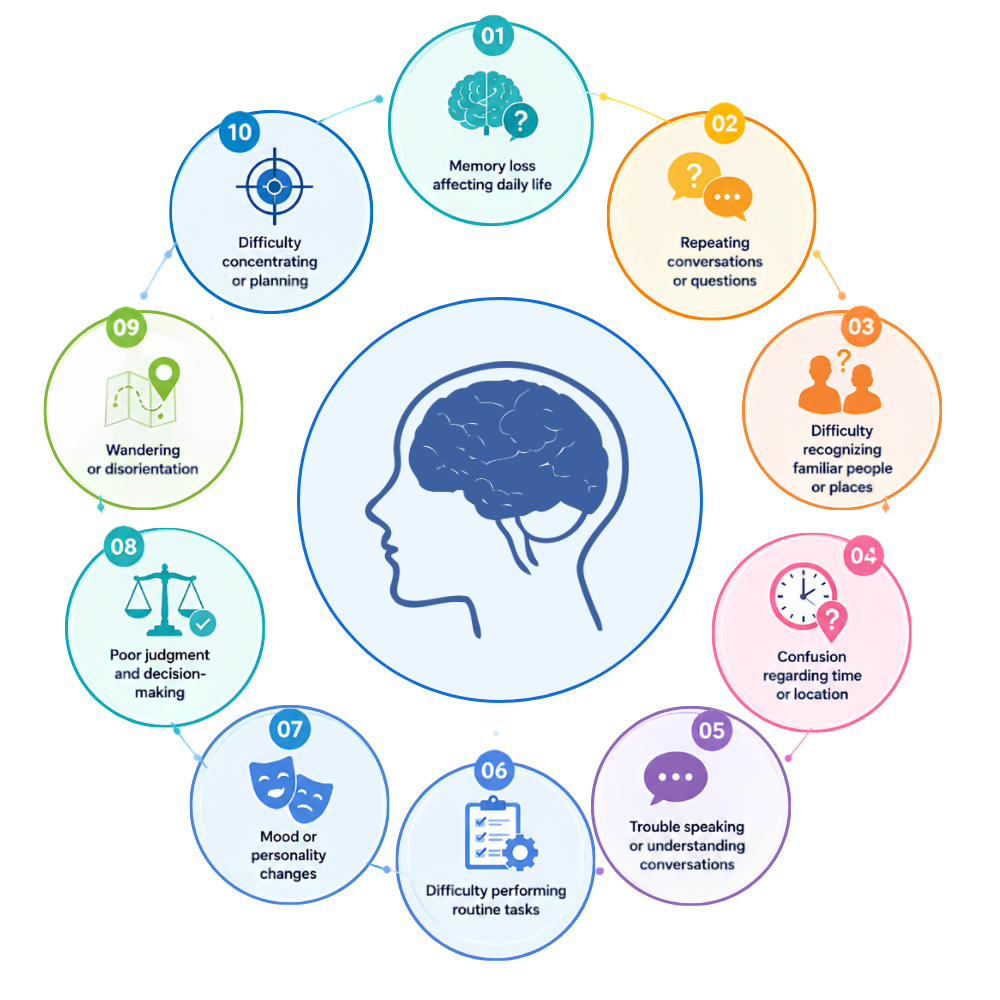
Symptoms may vary depending on the type and severity of dementia.
Common symptoms include:
Family members often notice gradual behavioral and memory-related changes over time.
Several neurological and medical conditions may contribute to dementia.
Alzheimer's disease
Age-related brain changes
Reduced blood supply to the brain
Stroke-related brain damage
Parkinson's disease
Head injury in certain cases
Diabetes and high blood pressure
Family history of neurological disorders
Proper diagnosis helps determine the type and severity of dementia while ruling out other neurological conditions.
The evaluation may include:

The doctor evaluates memory, speech, thinking ability, coordination, behavior, and cognitive function.

Details regarding symptom progression, family history, medications, medical conditions, and daily functioning are discussed carefully.

Investigations such as memory assessments, MRI scans, blood tests, or cognitive evaluations may be advised when required.
The treatment for dementia focuses on managing symptoms, supporting cognitive function, and improving daily quality of life.

Certain medicines may help support memory, attention, behavior, and cognitive functioning in some individuals.

Mental stimulation activities, structured routines, emotional support, and family-guided care may help maintain daily functioning and safety.

Healthy lifestyle habits may support long-term brain health. These may include:
Patients seeking dementia treatment often benefit from long-term neurological monitoring, supportive care, and family-centered management planning.

Dr. Puneet Gulati is a renowned neurological specialist who focuses on identifying cognitive and neurological changes early while creating personalized treatment plans based on each patient's condition, lifestyle, and long-term care needs.
Patients choose Dr. Puneet Gulati for dementia treatment because of:
"My focus is not only on managing memory-related symptoms, but also on helping patients and families maintain better daily comfort, safety, and long-term quality of life."
— Dr. Puneet GulatiPersistent memory loss, confusion, or behavioral changes should not be ignored, especially when they begin affecting independence and daily functioning. People from Rohini and nearby areas of Delhi consult Dr. Puneet Gulati for personalized neurological evaluation and supportive cognitive care.
If memory-related symptoms have been affecting daily life or family well-being, professional neurological help is just a call away. Book an appointment with Dr. Puneet Gulati for dementia treatment today at Trinity Spine and Neuro Clinic.
Disclaimer: The content on this page is for informational and educational purposes only. Diagnosis and treatment should always be based on a qualified doctor's clinical evaluation and medical advice.