
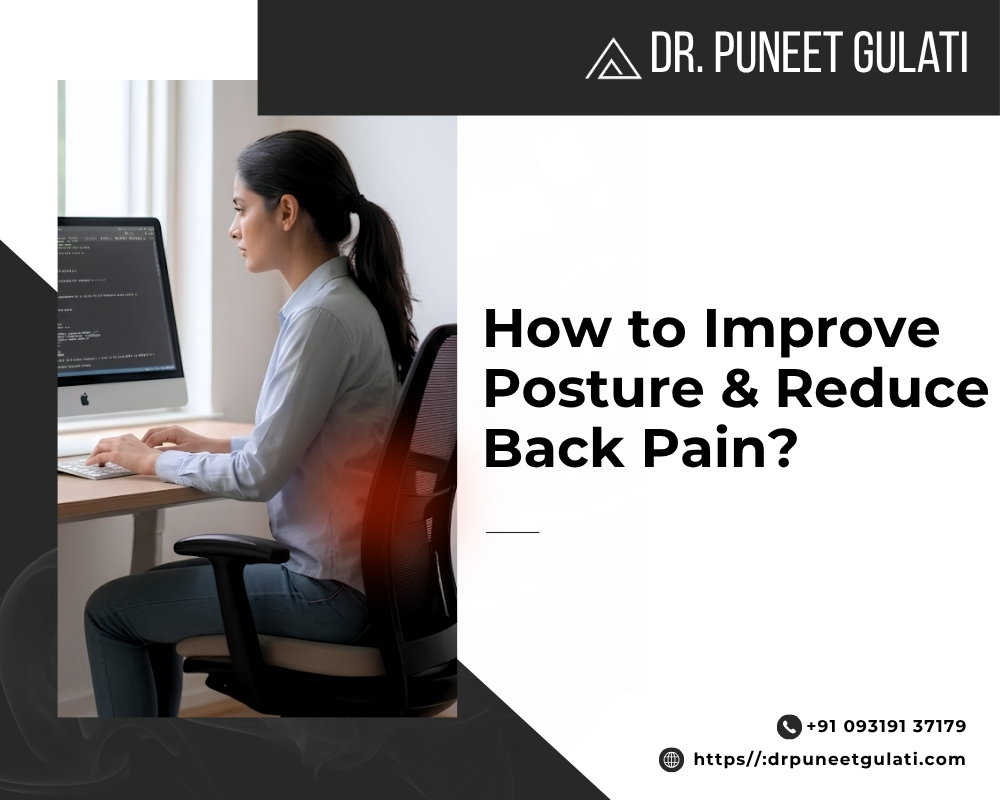
Have you ever stood up after working for hours and felt about 80 years old for a few seconds?
You stretch. You make weird noises. You place a hand on your lower back.
And then you wonder:
"Why does my back hurt? I wasn't even doing anything."
That's exactly the problem.
- Hours at a desk.
- Endless scrolling.
- Working from the couch.
- Leaning forward while watching reels.
- Carrying bags awkwardly.
- Slouching through meetings.
"Your posture is a reflection of your daily habits. Your back simply keeps the score."
At Trinity Spine & Neuro Clinic in Rohini, Dr. Puneet Gulati often reminds patients that posture is not about perfection; it's about creating habits that support your spine instead of working against it.
The relief is in knowing that small changes can make a surprisingly big difference.
Let's talk about why posture matters and how you can start treating your back a little better.
First, What Is Good Posture Anyway?
Many people think good posture means sitting perfectly straight, like a school principal is watching.
Not quite.
Good posture simply means your body is aligned in a way that places the least amount of stress on your muscles, joints, and spine.
When posture is balanced:
muscles work efficiently
joints experience less strain
movement feels easier
energy levels often improve
When posture is poor, your body compensates. And sooner or later, you feel it.
The Everyday Habits Secretly Affecting Your Back
Let's be honest.
Most of us aren't hurting our backs while climbing mountains.
We're hurting them while replying to emails.
The Laptop Lean
This is one of the biggest offenders. You start with good posture, then lean forward a little, then a little more. Before you know it, your face is six inches away from the screen. Your spine wasn't designed to spend hours in that position.
The Phone Scroll Position
You check one message. Then another. Then another. Thirty minutes later, your head is tilted forward, and your shoulders have collapsed inward. Your phone may only weigh a few hundred grams, but repeatedly looking down can place significant strain on the spine over time.
The Couch Trap
The couch feels comfortable. Until it isn't. Many people spend hours working, scrolling, or watching television while sitting in positions that provide very little support. Your back notices even when you don't.
Why Your Back Pain Feels Worse at the End of the Day
Ever noticed how discomfort often increases in the evening? There is a reason. Throughout the day, your muscles are constantly working to support your posture. When posture is poor, those muscles have to work harder, and by evening, they are simply tired.
It's similar to carrying a backpack all day. At first, it feels manageable, but after hours of carrying the extra load, your body starts asking for a break. The same thing happens with your back and posture-supporting muscles, often leading to stiffness, soreness, and fatigue by the end of the day.
The Relationship Between Posture and Energy
Here's something people rarely talk about.
Poor posture doesn't just affect your back.
It can affect how you feel overall.
Many individuals notice:
increased fatigue
reduced concentration
muscle tension
headaches
general discomfort
When your body spends all day fighting gravity inefficiently, it naturally uses more energy.
Good posture isn't about looking better.
It's about functioning better.
Signs Your Posture Might Be Calling Out For Help…
Your body usually gives clues.
Common signs include:
recurring back pain
stiffness after sitting
rounded shoulders
frequent neck discomfort
muscle fatigue
difficulty standing comfortably for long periods
Many people normalize these symptoms because they happen gradually.
But gradual doesn't mean normal.
The Silver Lining: Posture Can Improve
Here's where things get encouraging.
Unlike many health issues, posture often responds well to consistent small changes.
You don't need a complete lifestyle makeover.
You need awareness.
And a little consistency.
1. Stop Trying to Sit Perfectly
This might sound surprising, but the goal isn't perfect posture. The goal is movement. Even excellent posture becomes problematic if maintained for hours without moving. Your body loves variety, so change positions frequently. Stand, stretch, walk, and move throughout the day.
2. Follow the 30-Minute Rule
Every 30 minutes, stand up, stretch, walk briefly, and reset your posture. It doesn't need to be a workout. Even a short movement break can help reduce stiffness. Think of it as refreshing your spine.
3. Bring Screens to Eye Level
One of the easiest improvements you can make is adjusting your screen position. Whether you're working on a laptop or checking your phone, try to bring the screen closer to eye level. Your neck and upper back will thank you.
4. Strengthen the Muscles That Support You
Good posture isn't only about sitting differently; it's also about strength. Strong muscles provide better support for the spine.
Areas that often benefit from strengthening include:
core muscles
upper back muscles
glutes
shoulders
A stronger support system makes good posture easier to maintain naturally.
5. Stretch What Has Become Tight
Many modern lifestyles create tightness in:
chest muscles
hip flexors
neck muscles
shoulders
Stretching helps restore balance and improve mobility.
Small daily stretches often create noticeable improvements over time.
6. Don't Ignore Sleep Position
You spend roughly a third of your life sleeping, which makes sleep posture surprisingly important. A supportive mattress and pillow can help reduce unnecessary strain on the spine. Your back deserves a good night's recovery.
7. Learn the Difference Between Discomfort and Warning Signs
Some soreness after a long day is common. Persistent pain is different.
Pay attention when discomfort becomes:
frequent
worsening
persistent
limiting daily activities
Ignoring problems rarely makes them disappear.
Why Quick Fixes Usually Don't Work
Many people search for:
miracle stretches
magical chairs
instant pain relief gadgets
The truth?
Most posture-related problems develop over time.
And most meaningful improvements happen the same way.
Gradually.
Small changes performed consistently usually outperform dramatic changes performed once.
The Posture Myth Social Media Loves
Let's clear something up: good posture does not mean being rigid. Your spine is designed to move, not stay locked in one position all day. In fact, some people spend so much effort trying to sit perfectly straight that they create tension elsewhere in the body. Healthy posture is flexible posture. The best position is often the next position, which is why movement matters far more than perfection.
The Back Pain Cycle Nobody Talks About
Here's something interesting.
Back pain often creates its own cycle.
Pain leads to less movement. Less movement causes stiffness, and stiffness leads to even more discomfort. That's why many people find that gentle movement, good posture, and healthy daily habits help break the cycle and support recovery.
Small Habits That Add Up
If you're wondering where to start, start here:
Morning
Stretch for a few minutes.
Avoid checking your phone immediately after waking up.
Work Hours
Adjust screen height.
Change positions regularly.
Take movement breaks.
Evening
Go for a walk.
Stretch tight muscles.
Reduce prolonged couch slouching.
Tiny habits repeated daily often create bigger results than occasional intense efforts.
FAQs
Can poor posture really cause back pain?
Yes. Poor posture can place additional stress on muscles, joints, and spinal structures, which may contribute to discomfort over time.
How long does it take to improve posture?
Every person is different. Many people notice improvements within a few weeks of consistently practicing better movement and posture habits.
Is standing always better than sitting?
Not necessarily. Both sitting and standing for prolonged periods can create strain. Regular movement is usually more important than choosing one position over another.
Can exercise help posture?
Absolutely. Strengthening and mobility exercises can improve muscle support, movement quality, and overall posture.
When should back pain be evaluated?
Pain that persists, worsens, interferes with daily activities, or is associated with weakness, numbness, or balance problems should be evaluated by a professional.
Your Spine Is Whispering For Help. Listen To It.
The way you sit, stand, scroll, sleep, work, and move all influence how your back feels.
The encouraging part is that small adjustments can often create meaningful improvements over time.
Consistent movement, proper ergonomics, and early attention to symptoms can go a long way toward reducing discomfort and protecting long-term spinal health.
If back pain has started affecting your daily routine, productivity, sleep, or overall quality of life, it may be worth understanding what's driving those symptoms.
At Trinity Spine & Neuro Clinic, Dr. Puneet Gulati focuses on helping individuals identify the underlying causes of spinal discomfort and take practical steps toward healthier movement and better long-term function.